
SLEEPMAXXING 101 How to survive the holidays and not go crazy

How to survive the holidays without going crazy
The holidays and end of the year are a unique time.
More meetings. More food. More stimuli.
Less regularity, less sleep, less space just for yourself.
If you feel tired, unbalanced, or "out of energy" after this period—it doesn't mean you're doing something wrong. It means your body is reacting normally to the most intense time of the year.
This short blog isn't about getting "back on track," it's not about resolutions or fixing yourself. This is Sleepmaxxing 101 for the holiday season—how to enjoy this time while also helping yourself with a few simple hacks.
Tip 1. Accept the change in rhythm (it's more important than you think)
A few bad nights don't matter in the grand scheme of a year. The problem isn't the lack of perfect sleep—it's the tension around "you should be sleeping better."
During the holidays, your rhythm naturally shifts. You go to bed later, wake up differently, and days are less predictable. And that's okay.
Instead of fighting it, it's better to introduce a minimum of order: go to bed at a similar time, even if it's later than usual, don't chaotically catch up on sleep during the day, and let your body regulate itself.
After a few days, the body always returns to its rhythm.
Tip 2. Sleep: not perfect, just stable
During the holiday season, sleep is rarely perfect. And it doesn't have to be. Stability matters, not perfection. A few simple things make a real difference:
– get some daylight during the day—even a short walk helps set your circadian rhythm
– dim the lights in the evening and limit stimuli—your brain will transition into a calmer mode faster
– if possible, avoid very heavy dinners late in the evening—nighttime digestion impairs sleep quality
– and one thing that is often overlooked but very important: nasal breathing at night
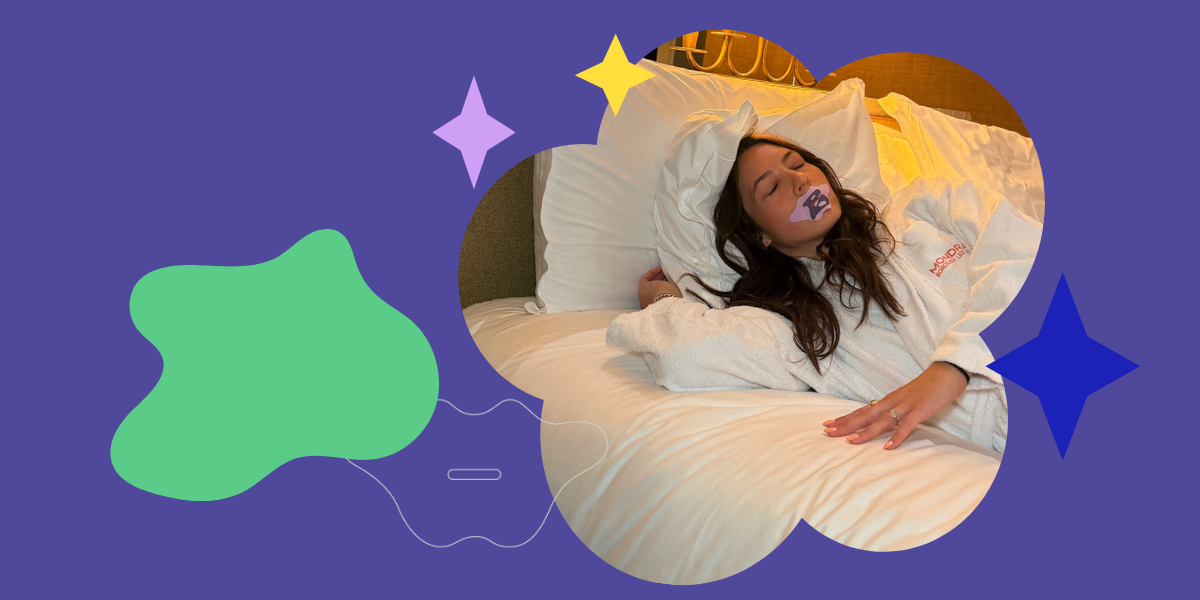
Nasal breathing promotes calmer, more stable sleep. Mouth taping can help maintain this pattern—especially when sleep is lighter or interrupted, which happens very often during the holiday season.
Tip 3. Food: stable energy during the holidays
During the holidays, we eat differently than usual—less regularly, more sweets, more heavy meals, and simply more food. This is normal. And it's not a problem in itself.
Problems arise when we lose the basics that provide energy and real nutritional value. And that's where the fundamentals come in: protein, good fats, and fiber.
Why is this so important? Because meals based on protein, good fats, and fiber help maintain stable blood sugar levels, reduce sudden energy crashes, and curb "ravenous hunger" a few hours after eating—which in practice means less fatigue during the day.
How can we implement this?
– start the day with a solid source of protein
– add fat and fiber to meals, don't eat "naked" carbs
– go for a 15-minute walk after a meal
– drink more water and electrolytes
– treat dessert as an addition after a meal, not a meal itself
Tip 4. Movement during the holidays: why it's key
In December, we naturally sit more, eat more, and are more overstimulated, which is why movement often takes a backseat. And that's precisely when it matters most—not necessarily in its "ideal" form, but as a constant part of the day.
If you have the opportunity to do your normal workout—do it. That's great.
If not—it doesn't have to be the gym, pilates, or a full training session.
It's enough to find a moment each day for movement that activates your body and helps relieve tension:
a short walk during the day,
15 minutes of walking after a heavier meal, stretching in the evening,
a light workout at home, a few minutes of mobility between meetings.
This type of movement genuinely supports digestion, regulates energy levels, and helps you fall asleep—even when the whole day (and holiday period) is far from "ideal."
Tip 5. 5 minutes just for yourself each day
December is noisy and chaotic. More people, more conversations, more stimuli, and less quiet. And the nervous system still needs a moment of peace and calm.
These 5 minutes a day just for yourself are not for "development" or ticking off tasks from a checklist. It's a moment when you send your body a signal that it can calm down. Short journaling, a few calm breaths, light stretching, or a moment without your phone genuinely reduce tension and help your body function better throughout the day. These short moments make a bigger difference than you might think.
Finally, it's worth simplifying.
When everything starts to overwhelm you, go back to the absolute basics: drink water regularly, go for at least a short walk every day, ensure a portion of protein in your meals, find 5-10 minutes just for yourself, and allow yourself to have the best possible night's sleep—not perfect, just good enough. And perhaps most importantly: enjoy this time. Pause for a moment and be grateful for another year closing. The rest can truly wait.



Comentarios