
How to start your mouth taping journey

What is mouth taping and why are more and more people turning to it?
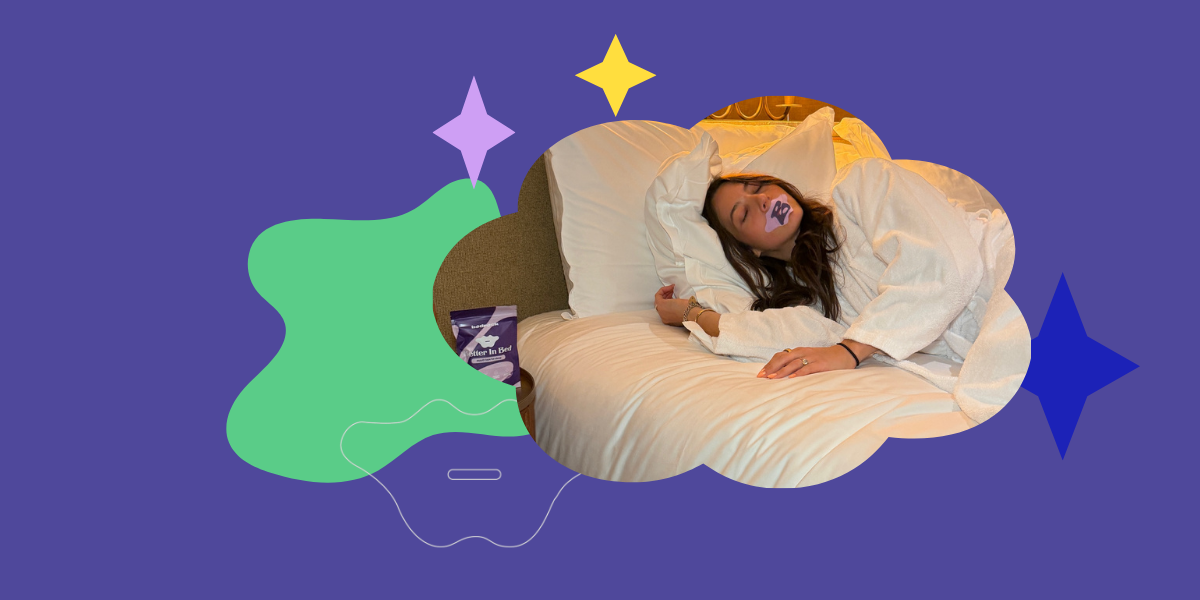
Mouth taping (i.e., taping your mouth shut at night) is a practice of gently closing your mouth during sleep to support nasal breathing — the natural, physiological breathing pathway.
In recent years, it has gained significant popularity, and for good reason.
Nasal breathing at night:
– stabilizes breathing
– reduces awakenings
– improves sleep quality
– reduces dry mouth
– may reduce snoring
Mouth tapes for sleeping help maintain this breathing pathway throughout the night — especially for people who tend to breathe through their mouth while sleeping.
This is not a "hack" — it's restoring a proper breathing pattern.
If you want to start, three things are key: whether you can breathe through your nose, what tapes you choose, and how you approach the first few nights.
1. Prerequisite: clear nose
Mouth taping is not for everyone.
The basic condition: the ability to breathe freely through the nose.
If nasal breathing is difficult, this method will not work properly — because instead of supporting natural breathing, it will restrict it.
That's why it's so important to first ensure that your nose is clear.
A simple test:
close your mouth and try to breathe exclusively through your nose for a few minutes.
If you experience:
– significant resistance
– tension
– the need to open your mouth
you should first restore comfortable nasal breathing.
Mouth taping only works when nasal breathing is already possible — it doesn't "force" it.
2. Choosing tapes: the most important element of the whole process
This is the moment that truly determines whether it "works" or not.
Let's be clear: there are many tapes on the market — various materials, shapes, with or without a hole, different adhesives.
Each of these elements affects the final quality and comfort of use.
You can compare it to watches or cars — the function seems identical, but the quality of craftsmanship completely changes the experience.
In practice: the differences between tapes directly translate into comfort, how well they stay on overnight, and whether you'll even want to use them regularly.
2.1 Material
The tapes should be made of soft, flexible, and breathable fibers — preferably silk.
Why:
– the skin around the mouth is exceptionally sensitive
– the material must be gentle
– it must allow the skin to breathe
Cheaper, rigid materials often cause discomfort, peel off more quickly, or are not optimal for the delicate skin around the mouth.
2.2 Flexibility and shape
The tape should stretch and adapt to the movement of the lips.
Lip-shaped tapes have a clear advantage — they work with the mouth muscles, rather than restricting them.
Simple, rectangular forms:
– restrict natural movement
– can cause skin tension
– increase the feeling of being "taped shut"
– peel off more often
In short: a good tape works with your mouth — not against it.
2.3 Hole in the middle
This element is particularly important, especially at the beginning.
It provides:
– greater psychological comfort
– easier adaptation
– a lesser feeling of being closed in
– the ability to drink water or have a short conversation before bed
This often determines whether someone continues or gives up after the first night.
2.4 Adhesive (hypoallergenic)
The adhesive should be:
– gentle on the skin
– but stable throughout the night
This is especially important for regular use and sensitive skin.
2.5 Kinesiology tapes and "home remedies"
These are not intended for use around the mouth.
– they have too strong an adhesive for this part of the face
– they are not designed for the movement of mouth muscles
– they increase the risk of irritation
In practice, this often leads to discomfort and abandonment of the method.
2.6 More advanced options (e.g., collagen)
More advanced solutions are also available, e.g., tapes with added collagen.
They combine:
– support for nasal breathing
– a nourishing effect for lips and skin
This is especially a good solution for people with sensitive skin or a tendency to dryness.
3. How to start: a step-by-step approach
There's no need to start with a full night — especially if discomfort arises.
Recommended approach:
– apply the tape during the day for 20–30 minutes to get used to the sensation
– then apply it in the evening, e.g., while reading or before bed
– when you feel comfortable, use it throughout the night
This allows the body to gradually adapt and reduces resistance.
3.1 What to expect at the beginning
Initially, you may experience:
– slight discomfort
– greater awareness of breathing
– the need to remove the tape
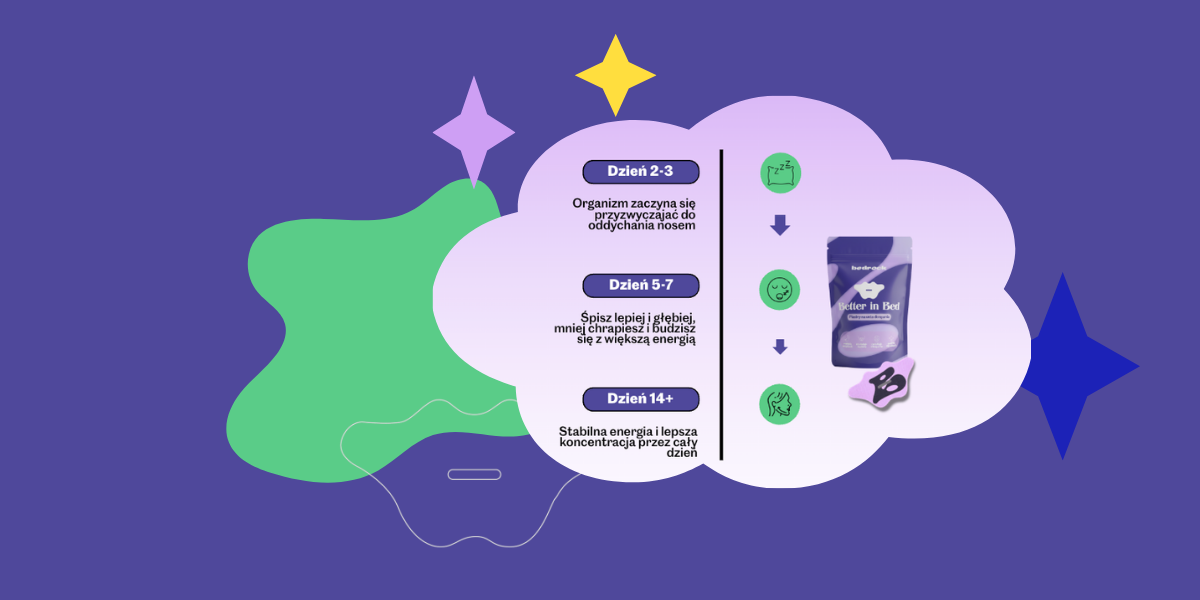
This is natural. For most people, adaptation takes 2–3 nights.
After this time:
– nasal breathing becomes more automatic
– sleep stabilizes
– the first noticeable effects appear
4. When not to use tapes
There are specific situations where you should refrain:
– nasal obstruction
– a cold
– an infection
– any difficulty with nasal breathing
In such cases, use should be suspended and resumed only after the symptoms subside.
Summary
Mouth taping can be a very effective tool to support nasal breathing and sleep quality — but how you start and what tapes you use truly determine the outcome.
Key elements:
– free nasal breathing
– well-chosen tape
– gradual implementation
– short adaptation period
The most common reason someone says "it doesn't work" is not the method itself — but its execution.
With well-chosen conditions, the difference in sleep quality appears quickly and is clearly noticeable.
If you want to start, choosing the right tapes (e.g., like Bedrock) significantly facilitates the entire process and increases the chances that you will stick with this method for longer.


Comentarios